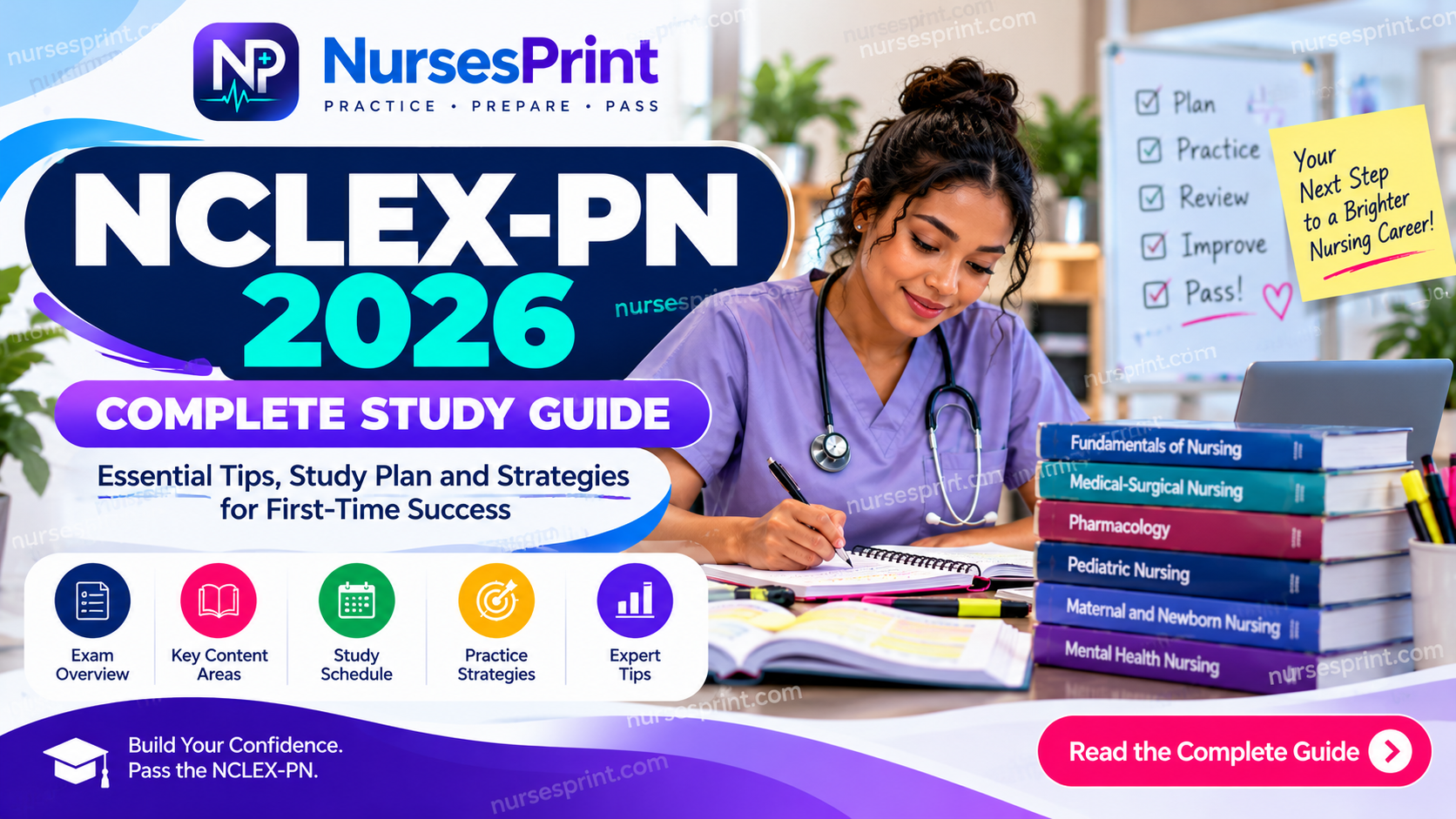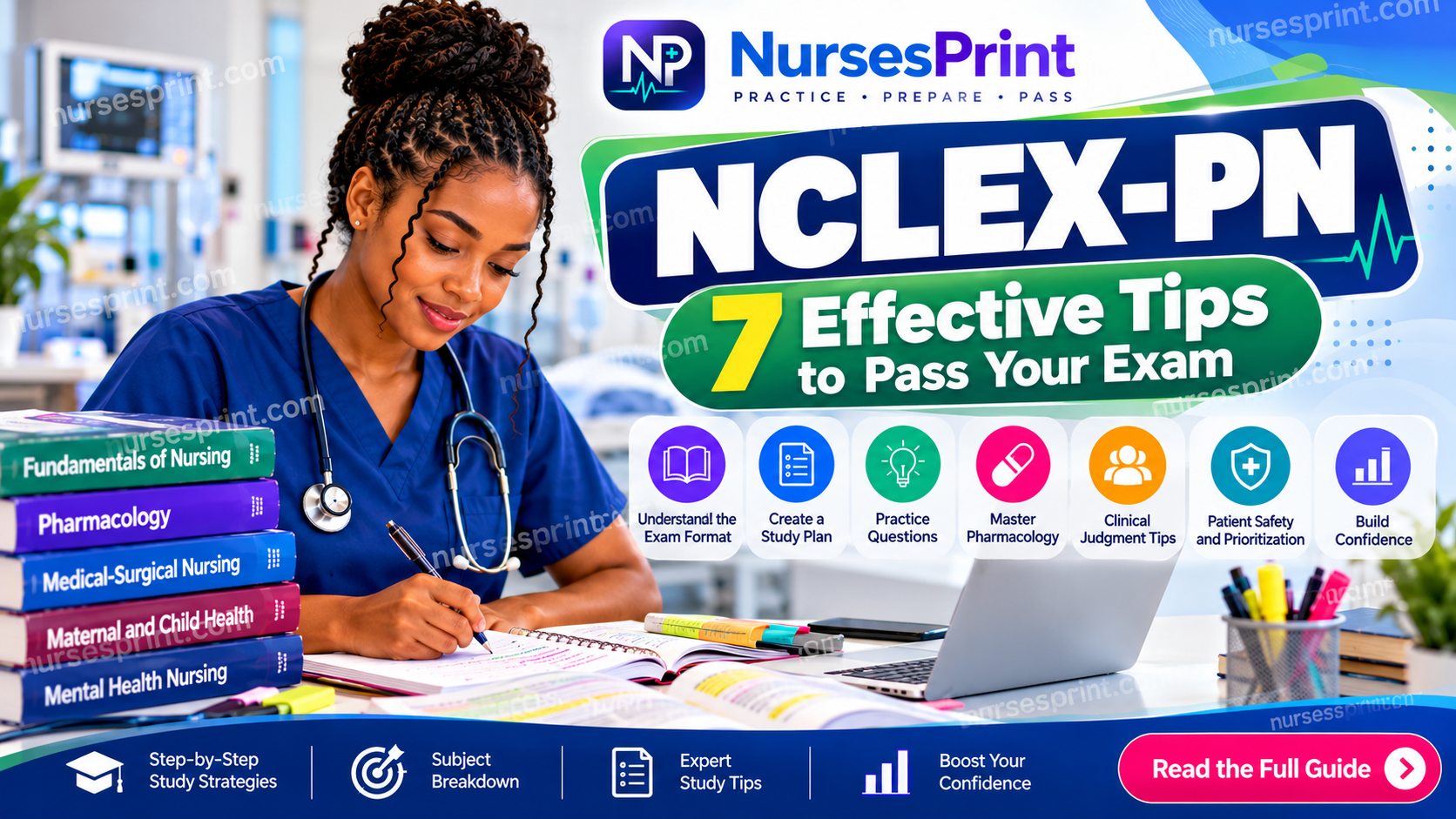
You've completed your practical nursing education. You've survived demanding assignments, clinical rotations and countless hours of studying. Now one important challenge remains: passing the NCLEX-PN examination.
For aspiring Licensed Practical Nurses (LPNs) and Licensed Vocational Nurses (LVNs), this examination is a major step toward professional licensure.
The good news? You don't need to memorize every nursing textbook to prepare effectively.
With a realistic study schedule, consistent practice and strong clinical reasoning, you can approach the NCLEX-PN with confidence.
Here are seven practical strategies to help you prepare for the 2026 examination.
Understanding the NCLEX-PN Exam in 2026
The National Council Licensure Examination for Practical Nurses evaluates whether candidates demonstrate the knowledge and judgment required for safe entry-level practical nursing practice.
The examination uses computerized adaptive testing (CAT).
Important NCLEX-PN facts:
Question range: 85–150 questions
Maximum testing time: Five hours
Exam format: Computerized adaptive testing
Question types: Traditional questions and Next Generation NCLEX formats
Primary focus: Safe and effective practical nursing care
For official examination information, visit the NCLEX official website.
1. Build a Four-Week NCLEX-PN Study Schedule
A structured study plan helps you cover essential nursing subjects without becoming overwhelmed.
Consider this four-week preparation roadmap:
Week | Main Study Focus |
|---|---|
Week 1 | Nursing fundamentals, infection control and patient safety |
Week 2 | Medical-surgical nursing and pharmacology |
Week 3 | Maternal health, pediatrics and mental health |
Week 4 | Clinical judgment, prioritization and practice assessments |
Adjust the schedule according to your knowledge and examination date.
2. Practice NCLEX-PN Questions Every Day
Regular practice questions help you become familiar with clinical scenarios and nursing decision-making.
Begin with approximately 25–40 questions daily.
As your understanding improves, gradually increase your practice volume.
Review the rationale for every answer rather than simply memorizing correct options.
Explore NursesPrint nursing exam preparation resources to strengthen your knowledge through structured practice.
3. Master Patient Safety and Infection Control
Patient safety is central to practical nursing.
Focus on essential topics including:
Standard and transmission-based precautions
Hand hygiene
Fall prevention
Medication administration safety
Patient identification
Recognizing changes in patient conditions
Understanding these principles helps you select safe nursing interventions.
For additional infection prevention guidance, review the CDC infection control resources for healthcare professionals.
4. Strengthen Pharmacology Knowledge
Pharmacology questions evaluate your understanding of medication administration and patient monitoring.
Study common medication classifications, major adverse effects and nursing responsibilities.
Pay particular attention to medication safety and recognizing findings that require immediate attention.
Avoid memorizing drug names without understanding their clinical applications.
5. Develop Clinical Judgment Skills
The Next Generation NCLEX emphasizes clinical judgment through realistic patient situations.
Practice identifying abnormal assessment findings and determining appropriate interventions.
Use the following reasoning process:
Recognize the problem → Analyze findings → Identify priorities → Select an intervention → Evaluate outcomes.
This approach can help you answer unfamiliar clinical questions.
6. Understand Practical Nursing Responsibilities
The NCLEX-PN evaluates nursing care within the practical nurse's scope of practice.
Review supervision, delegation and communication responsibilities.
Remember that LPN/LVN responsibilities vary by jurisdiction and workplace policy.
Always consider patient safety and the nursing role described in each examination scenario.
7. Prepare for Examination Day
During your final days, concentrate on reviewing essential concepts rather than learning large amounts of new information.
Confirm your testing appointment and identification requirements.
Get adequate sleep and arrive according to the testing center's instructions.
During the examination, read every question carefully and focus on selecting the safest response.
NCLEX-PN Frequently Asked Questions
Is the NCLEX-PN harder than the NCLEX-RN?
The examinations assess different entry-level nursing roles. Their content and expectations reflect the responsibilities of practical nurses and registered nurses respectively.
How long should I study for the NCLEX-PN?
Many candidates begin with four to eight weeks of preparation. Your ideal schedule depends on your nursing knowledge and practice performance.
Can I pass the NCLEX-PN on my first attempt?
Yes. Consistent preparation and effective clinical reasoning can improve your readiness. However, no study method guarantees a passing result.
Final Thoughts: Your Practical Nursing Career Starts Here
Passing the NCLEX-PN is an important milestone in becoming a licensed practical or vocational nurse.
Focus on building strong nursing knowledge, improving clinical judgment and practicing consistently.
Every focused study session brings you closer to examination readiness.
Ready to strengthen your nursing knowledge?
Visit NursesPrint to explore nursing practice questions and preparation resources.
Prepare with purpose. Practice with confidence. Take the next step toward your nursing career.