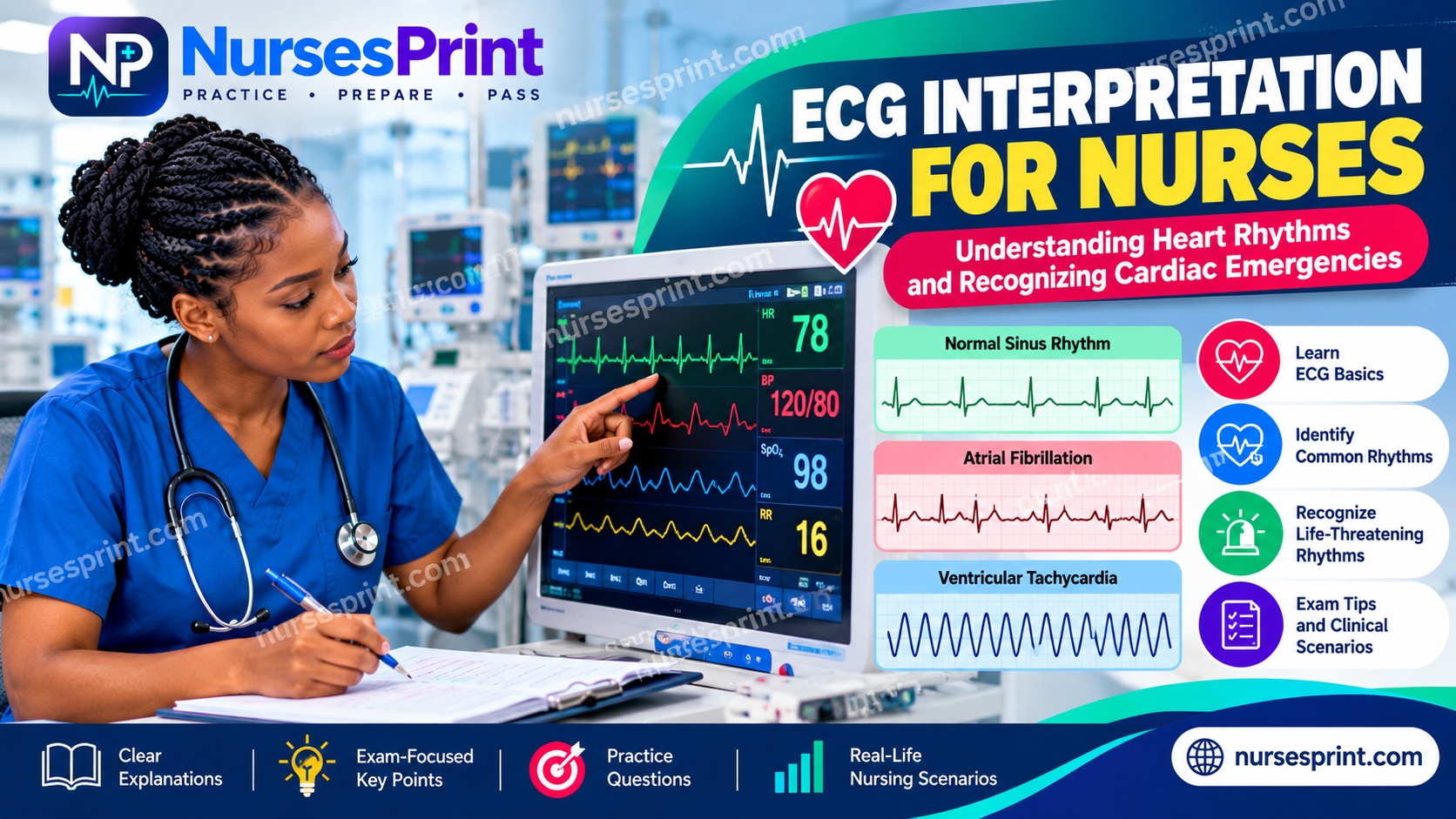
Electrocardiogram (EKG) technicians play an important role in healthcare by recording the heart's electrical activity and supporting cardiac diagnostic procedures.
For aspiring technicians, earning professional certification can demonstrate knowledge of EKG procedures, patient preparation and essential cardiovascular concepts.
However, preparing for the EKG technician certification exam requires more than memorizing heart rhythms. Candidates must understand cardiac anatomy, electrode placement, equipment operation and patient safety.
This guide explores practical strategies to help you prepare for the NHA Certified EKG Technician (CET) examination.
Understand the NHA CET Examination
The National Healthcareer Association offers the Certified EKG Technician credential.
The examination evaluates knowledge relevant to electrocardiography, patient preparation, EKG acquisition and related professional responsibilities.
Before beginning your preparation, review the current examination outline.
The National Healthcareer Association provides official information about certification eligibility and examination resources.
Use the latest examination requirements to guide your revision.
Review Basic Cardiac Anatomy
Understanding how the heart functions is essential for interpreting EKG concepts.
Begin by reviewing the four chambers of the heart and the role of the cardiac valves.
Study how blood circulates through the pulmonary and systemic systems.
Next, examine the heart's electrical conduction pathway.
Focus on the sinoatrial node, atrioventricular node, bundle of His, bundle branches and Purkinje fibers.
Understanding these structures helps explain how electrical impulses produce cardiac contractions.
Learn the Fundamentals of EKG Waveforms
An electrocardiogram records electrical activity associated with the cardiac cycle.
Review the P wave, QRS complex and T wave.
Understand what each waveform represents and how intervals relate to cardiac conduction.
Practice identifying these components on sample EKG strips.
Rather than memorizing waveforms without context, connect each feature to the underlying physiological process.
This approach helps strengthen your understanding of rhythm interpretation.
Master EKG Lead Placement
Correct electrode placement is essential for obtaining an accurate EKG recording.
Review standard 12-lead EKG procedures and the anatomical landmarks used for chest electrode placement.
Understand the difference between electrodes and the leads derived from their electrical signals.
Practice identifying placement locations using approved training materials.
Incorrect placement can produce misleading recordings.
During practical training, focus on patient preparation, equipment setup and accurate electrode positioning.
Recognize Common Cardiac Rhythms
Rhythm recognition is an important area of EKG technician preparation.
Begin with normal sinus rhythm before reviewing other commonly encountered patterns.
Study the characteristics of sinus bradycardia, sinus tachycardia, atrial fibrillation and selected conduction abnormalities.
When reviewing an EKG strip, examine the rate, rhythm regularity, P waves and relevant intervals.
Remember that rhythm interpretation should be performed within your training and authorized responsibilities.
Technicians must follow workplace procedures when reporting concerning findings.
Understand Patient Safety and Communication
EKG technicians frequently interact with patients who may feel nervous about cardiac testing.
Explain procedures clearly and maintain patient privacy.
Review appropriate patient identification and infection prevention practices.
The Centers for Disease Control and Prevention provides guidance on infection prevention in healthcare settings.
Understanding these principles supports safe equipment handling and responsible patient care.
Practice EKG Questions and Review Your Mistakes
Practice questions help you apply cardiac knowledge to examination scenarios.
After completing a study session, review every incorrect response.
Identify whether your difficulty involves cardiac anatomy, rhythm recognition or procedural knowledge.
Use diagrams, flashcards and sample EKG strips to reinforce challenging concepts.
You can also explore healthcare examination preparation resources through NursesPrint.
Combine written revision with supervised practical training whenever possible.
Create a Consistent CET Study Routine
Organize your study schedule around the official examination content outline.
Dedicate separate sessions to anatomy, EKG fundamentals, lead placement and rhythm recognition.
Use timed practice sessions to develop familiarity with examination conditions.
Revisit difficult topics regularly.
In the final days before your examination, prioritize revision and adequate rest.
Final Thoughts
Preparing for the NHA CET examination requires consistent practice, cardiovascular knowledge and attention to patient safety.
By mastering cardiac anatomy, understanding EKG waveforms and developing sound procedural knowledge, you can strengthen your examination readiness.
Ready to advance your healthcare career?
Explore educational resources at NursesPrint and continue building your clinical knowledge.
NursesPrint — Practice • Prepare • Pass